1. Blog
  2. Article

Canonical
on 11 March 2015
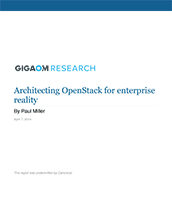
Architecting OpenStack for enterprise reality


With OpenStack becoming more and more popular as a cloud-building technology for enterprises, companies are asking themselves several important questions. How viable is OpenStack as an enterprise platform? Is it possible (and feasible) to integrate it with existing virtualisation infrastructure, e.g. vSphere from VMware? Is there a business case for such integration, and what are the risks and challenges associated with it? Finally, how do they best utilise OpenStack: is the “vanilla” architecture always the best approach, or is there a case for swapping out certain components for third-party tools?

Gigaom analyst Paul Miller looks at these questions and more in this report sponsored by Canonical. For a more in-depth look at integrating vSphere and OpenStack, you may also want to read this whitepaper.
Download eBook

Related posts


Jon Taylor
22 June 2026

How to use RISC-V custom instructions with Ubuntu

Silicon Article

Introduction My previous blog talked about the importance of instruction set standardization for ecosystem stability and growth through the use of profiles. And standardization is indeed important, but since one of RISC-V’s great benefits is the ability to customize the instruction set, we should also consider how to support that ability. ...


ilvipero
22 June 2026

Ubuntu Summit 26.04: connected by open source

Ubuntu Ubuntu tech blog

What an incredible experience! Ubuntu Summit 26.04 has officially drawn to a close, but the energy from our global community is still buzzing – in the comments section, on social media, and in news reports. Whether you joined us in person or tuned in from across the globe, you helped make this edition our most ...


Jonathan Beri
18 June 2026

So you need to add microcontrollers to your fleet: now what?

Ubuntu Article

Your Ubuntu Core fleet is running beautifully. OTA updates roll out in minutes. Every device is strictly confined, cryptographically attested, and carrying a 10 to 15 year long term support (LTS) commitment. The operational team sleeps soundly. Then the product roadmap meeting happens. The industrial floor needs vibration sensors on every ...